
Introduction: A System of Integrated Modules
A ground rail spray line module is not a single machine—it is a carefully orchestrated set of subsystems that work together to move parts, apply coating, cure it, and manage the resulting air quality. Understanding each module helps you specify the right configuration and avoid costly surprises.
This article walks through the five core modules of a typical small ground rail circular spray painting line.
Module 1: Conveyor and Rail System
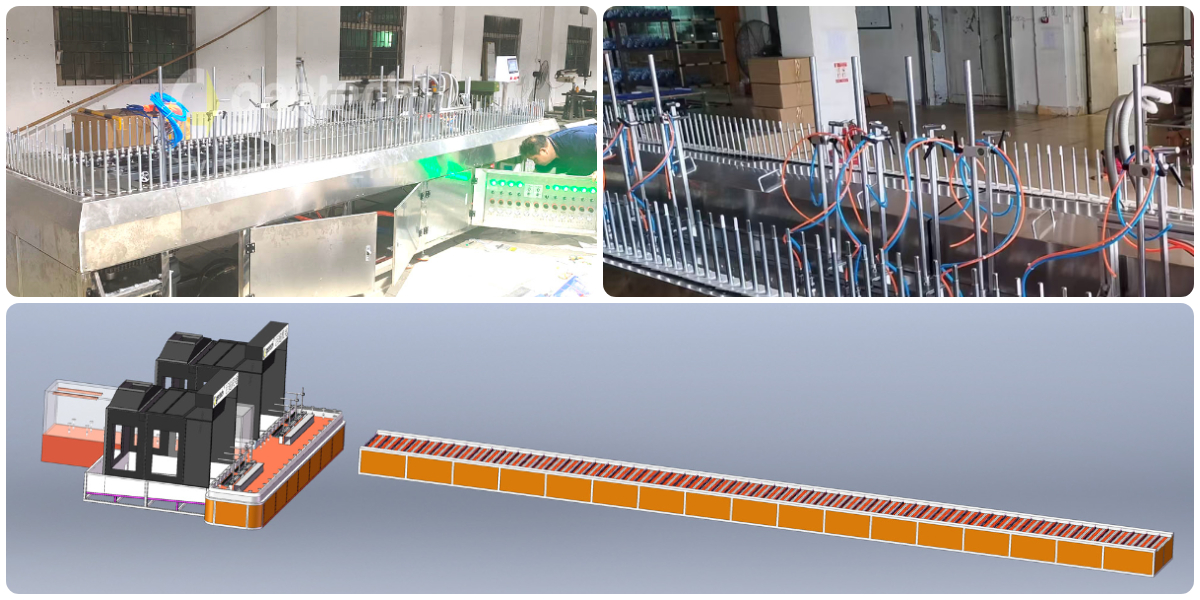
The conveyor is the backbone. It consists of hardened steel rails laid on the floor, a drive unit with variable frequency control, and a series of trolleys or carts that carry parts around the loop.
Key design choices include rail material (mild steel vs stainless for humid environments), trolley load capacity, and whether carts rotate independently or are driven by a central chain. For most small parts, individual rotation during spraying is essential for 360-degree coverage.
Module 2: Spray Booth
The spray booth contains the painting process. It includes the booth enclosure (with observation windows), lighting, air filtration, and the paint application equipment—typically electrostatic spray guns, reciprocating sprayers, or robotic arms.
Water curtain booths are the most common for small lines because they capture overspray efficiently and are easy to clean. Dry filter booths are an alternative when water supply is limited. The booth also houses the electrostatic dust removal unit that cleans parts before painting.
Module 3: Curing Oven
After spraying, parts enter the curing oven where heat solidifies the coating. Small ground rail lines typically use hot air circulation ovens with electric or gas heating. Infrared ovens are an option for very thin coatings or UV-curable paints.
The oven is the most energy-intensive module. Gas heating is cheaper where LPG or natural gas is readily available; electric is simpler to install and preferred in regions with low industrial electricity rates. Oven temperature uniformity directly affects coating quality, so proper airflow design is critical.
Module 4: Electrical Controls
The control module ties everything together. A PLC (Programmable Logic Controller) manages conveyor speed, oven temperature, spray gun triggering, and safety interlocks. A touchscreen HMI (Human Machine Interface) lets operators adjust parameters, save recipes, and monitor alarms.
Modern systems offer bilingual interfaces (Chinese/English), remote diagnostics via Ethernet, and data logging for quality traceability. For buyers planning Industry 4.0 integration, the control module should include RS485 or Ethernet/IP communication for MES connectivity.
Module 5: Exhaust and Environmental Protection
The exhaust module manages air quality both inside the booth and in the surrounding workshop. It typically includes an exhaust fan, ductwork, and a treatment device such as activated carbon filters or a regenerative catalytic oxidizer (RCO).
Water used in the water curtain booth is collected in a sump and either recirculated or sent to a wastewater treatment system. The exhaust module is often the most scrutinized by environmental authorities, so choosing the right VOC treatment level for your target market (EU, North America, or domestic China) is essential.
How the Modules Work Together
In a typical 8-station circular line, the sequence is: load → electrostatic dust removal → spray booth (painting) → flash-off → curing oven → cooling → unload. Each module is sized to match the cycle time of the others, ensuring no bottlenecks.
For example, if the spray booth paints a part every 30 seconds, the oven must be long enough to cure that same part within the same 30-second window as the next cart arrives. The control system coordinates all of this automatically.
Customization and Optional Modules
Beyond the five core modules, many buyers add pre-treatment stations (degreasing, phosphating, or nano-ceramic coating), a second spray booth for two-color painting, or an inline quality inspection station with cameras.
The modular nature of ground rail systems means you can start with the essentials and add capabilities later. This phased approach spreads capital expenditure and lets you prove ROI before investing in upgrades.
Conclusion
A spray booth oven conveyor system built on a ground rail platform is greater than the sum of its parts. When each module is properly specified and integrated, you get a reliable, efficient production line that delivers consistent coating quality day after day.
Ready to spec out your line? Send us your part drawings and daily volume targets, and we will configure the optimal module combination for your needs.